

Once the infrastructure is real and the transformation appears inevitable, the temptation is to think the investment answer is simple. Just back the future and wait. The dot-com era is the reason that conclusion can still be dangerous.
In 1999, two companies were selling versions of the same story. Both intended to use the internet to remake retail, both burned cash to grow, both had the future on their side. It was the Sears playbook a century later, the catalog without the paper, the network delivering to the doorstep, and both companies were auditioning for the part. One was Amazon. The other was Pets.com. At the time you could not reliably tell which was which, and that difficulty, not the market correction that followed, is the lesson worth keeping.
What People Remember
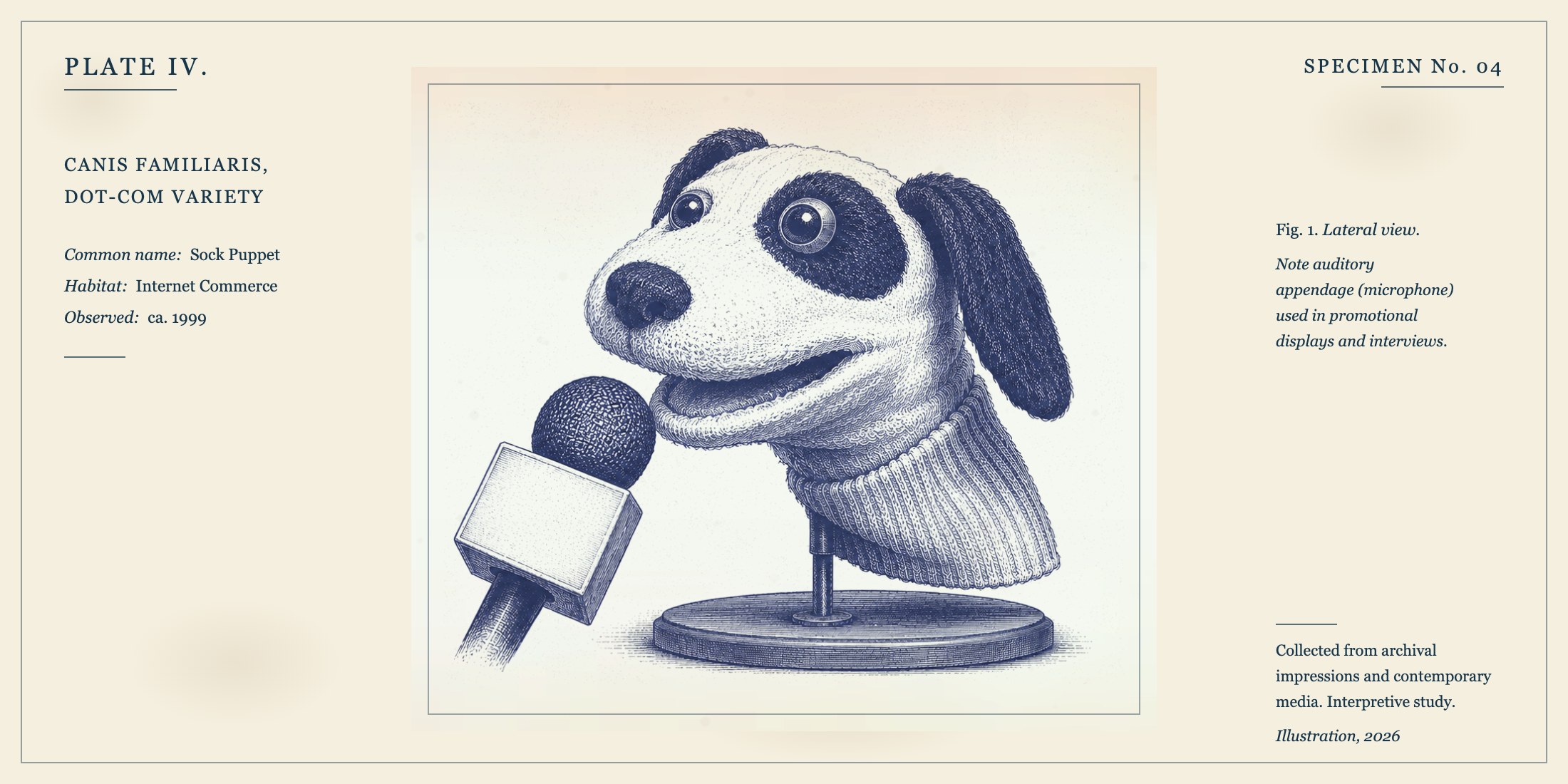
The dot-com era is remembered as a hype machine that flamed out: the sock-puppet mascot, the overnight paper fortunes, the tech wreck. The Nasdaq peaked in March 2000 and fell roughly seventy-eight percent over the next two and a half years. But the deeper mistake was confusing failed prices and failed companies with a failed technological transformation.
Discipline asks questions an investor can actually answer.
What the Era Got Right
The transformation itself did not fail. The internet remade commerce, media, and most of the economy, and the fiber and data centers built in those years did not evaporate when the market value did. The future the era promised largely arrived. The optimists were right about nearly everything that mattered, except the things an investor actually needs to get right.
What the Market Got Wrong
The prices assumed the transformation would arrive on the boom's schedule, and it took far longer. The capital crowded into names that mostly did not become the winners, while many of the eventual winners were barely on anyone's radar in 1999. And beneath both mistakes sat valuations detached from any plausible path to earnings. Right destination, wrong timing, wrong names, wrong prices. That is how investors can be right about the future and still fail to capture its value.
The Problem in Real Time
The difficulty was in sorting it out while it was happening. Amazon fell more than ninety percent and stayed down for about two years before the recovery that eventually vindicated it. Buying the dip in mid-2000 meant enduring another fifteen months of decline. Pets.com went from IPO to liquidation in about nine months. In early 2000, both looked like richly valued, unprofitable companies betting on scale to remake retail. Conviction about the internet did not solve the problem. Being right about where it was going told you nothing about which of the two would survive it.
The useful question is how to remain positioned as the structure hardens, which is a matter of behavior, not prediction.
Where the Value Went
When the dust settled, the durable value was not always captured by the companies that attracted the most early attention. Some disappeared, some were absorbed, and others helped build the market without owning much of the value it created. Unlike the railroad era, the dot-com bust produced few great consolidators. There was no Morgan reorganizing the wreckage into disciplined systems. The durable winners were companies like Google that built new business models on inexpensive infrastructure, abundant talent, and altered consumer habits left behind by the boom. The network was real, but the value was often captured by people other than those who had paid to build it.
Discipline
So the useful question is not how to identify the Amazon or Google in advance. The useful question is how to remain positioned as the structure hardens, which is a matter of behavior, not prediction. Prediction asks which name wins, and that was the test few in 1999 could pass. Discipline asks questions an investor can actually answer. Is the exposure to a layer of the system, or to a single name inside it? Would the position survive the timing being wrong by years, as it was? What does the price already assume? None of those requires knowing the future, and every one of them was answerable in 1999. In practice it means building exposure around the system rather than the story, around the layers the transition passes through rather than the names that happen to dominate a particular moment of it, which turn over far faster than the structure underneath them ever does.
This is the molt's lesson from the other side. Being right about the structure does not completely protect you in the soft window. Navigating the molt requires its own kind of discipline, and is easier when your strategy is more attached to the structure than to the hype. The goal is not to predict every winner. The goal is to stay aligned with the transition with enough capital and conviction to benefit from it.
The structure, in the end, did harden. The internet became infrastructure, as ordinary and indispensable as the power grid. Which leaves the last question in the series. When the destination arrives, what could it look like?